How to know if a cosmetic is truly halal? Our method
A word on the label is not enough. The right reflex is to look at what the formula actually contains and to distinguish facts from marketing promises.
1. Start with the INCI list
The INCI list is the basis for verification. It allows you to identify the oils, waxes, perfumes, preservatives, and other components present in the formula. When an ingredient is ambiguous or its origin is not specified, it is better to ask the manufacturer for additional information rather than drawing a conclusion from a slogan.
What we avoid confusing
Vegan, natural, organic, alcohol-free and halal do not mean the same thing. A formula can contain honey or beeswax and not be vegan. A halal certification, for its part, assumes a real certification: Char3i must not present itself as "halal certified" without corresponding certification.
2. Verify product by product
At Char3i, we prefer to publish the compositions and speak about each formula as it really is, rather than applying a single claim to the entire range.
ZAYT — Beard oil
Base of five vegetable oils: castor, argan, sweet almond, grape seed, and jojoba, with perfume. ZAYT beard oil is our formula explicitly presented as alcohol-free.
QUWWA — Beard serum
Avocado, castor, and tea tree essential oil. It is a targeted routine serum, to be massaged regularly on the desired areas.
GHUSL — Beard shampoo
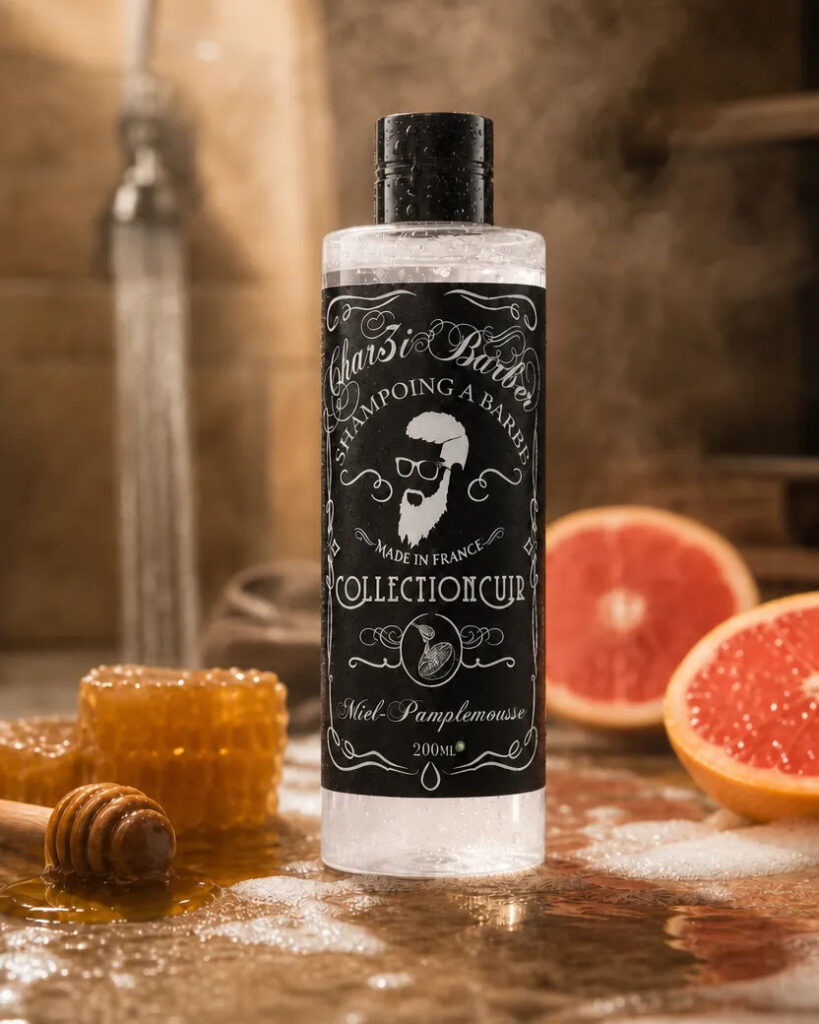
Its composition includes, among other things, aloe vera and honey. GHUSL beard shampoo is therefore not a vegan product. Its INCI list is available on its product page.
SABR — Beard balm
Shea butter, beeswax, coconut, sweet almond, black seed, and hemp oils, with perfume depending on the variant. The presence of beeswax also means that the product is not vegan.
3. And when there is a religious disagreement?
Certain formulation topics may be subject to differences of opinion. Our role as a brand is not to turn a cosmetic sheet into a fatwa. We can provide the composition, explain our formulation choices, and avoid claims that we cannot prove.
For a specific religious question concerning an ingredient or a personal situation, the safest thing remains to ask a qualified person of knowledge by giving them the exact composition of the product.
This method aims for transparency: verifiable composition, precise vocabulary, and no certification claimed without justification.