Beard brush or comb: which to choose and how to use it
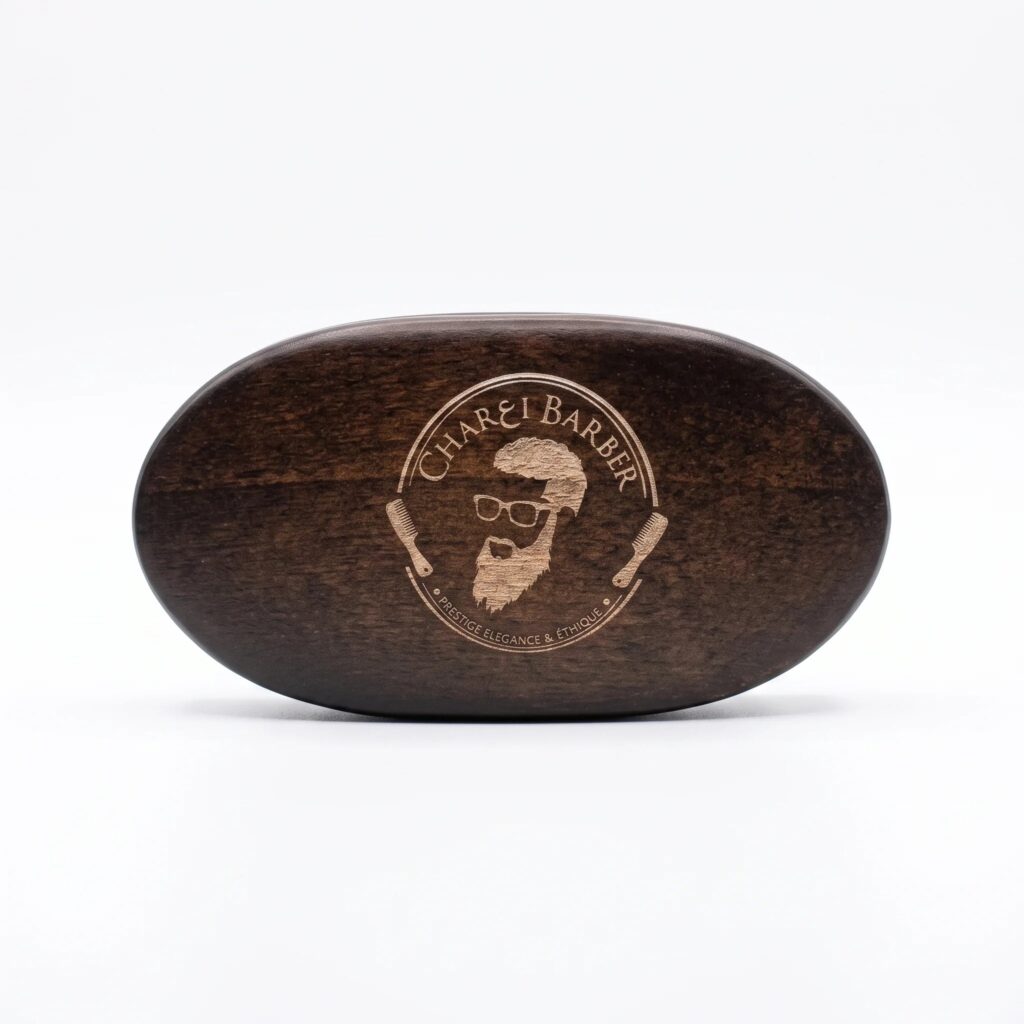
The right tool for your length, fine or wide teeth, and the method to style without breaking the hair.
You have an oil, maybe a balm, and you apply them with your fingers. It works well enough. But the product accumulates in the same spot, a few hairs always stick out at the same corner of the chin, and the beard looks less neat at the end of the day than it did when you left the bathroom.
That is often when the question arises: do I need a brush or a comb? Both, just one, which one first?
The honest answer can be summed up in one sentence: it mainly depends on the length and texture of your beard. The rest of this article helps you choose without buying three useless tools, and then how to use them correctly. Because a good tool used poorly breaks more hair than it disciplines.
What a brush or comb will never do
Before talking about tools, let's set things straight.
A brush or a comb does not make the beard grow. It doesn't create any hair, it doesn't "wake anything up," it doesn't fill in a patch. If you read somewhere that a daily brush stroke "stimulates growth," keep your money: that's marketing, not biology. Your beard density depends first and foremost on your genetics.
What a good tool really does is more modest and more useful:
- detangle without pulling;
- direct the hairs in the same direction;
- distribute the oil or balm evenly, instead of leaving it all in one place;
- give a neater look, which lasts better throughout the day.
For patchy areas and what you can actually expect from them, we wrote a dedicated article: patchy beard, what really works. Here, we are talking about maintenance and shape.
Comb and brush: two tools, two roles
They are often lumped together. They don't do the same job.
The comb detangles and structures. Its teeth pass between the hairs, separate the strands, undo knots, and set a direction. It is the precision tool: mustache contour, cheek line, setting in place before a balm. It becomes truly useful as soon as there is length to work with.
The brush smooths and distributes. With its many dense bristles, it covers more surface area at once. It flattens stray hairs, spreads the product over the entire beard, and gives a more uniform finish. It is the finishing tool.
In summary: the comb is for bringing order, the brush is for a clean finish. On a medium or long beard, they are not competitors, they follow each other: comb first, brush after.
The right tool for your beard length
No need for a millimeter-perfect rule. Just identify where you are at.
Short beard (a few days to about 2 cm). A comb doesn't have much to detangle: the hairs are too short to get tangled. The brush is more logical. It directs the hairs and distributes a few drops of oil to the base, where fingers have trouble reaching.
Medium beard (about 2 to 5 cm). This is the zone where the two tools complement each other best. The comb starts to be useful for detangling and shaping, the brush remains ideal for smoothing and distributing the product. If you only have to pick one, choose the one that addresses your main problem: knots and hairs going everywhere, the comb; dull look and poorly distributed product, the brush.
Long beard (beyond about 5 cm). The comb becomes almost essential. A brush alone stays on the surface and leaves knots deep down, or pulls on them. Detangle with the comb, then finish with the brush if you want a smoother look.
Very dense, curly, or coily beard. Here, the width of the teeth matters more than the length of the beard. A comb with wide teeth passes through without snagging and without breaking the curl. Fine teeth, on this type of hair, pull and break. The brush can be used for finishing, gently.
Fine teeth, wide teeth, with or without a handle
Once you know you want a comb, it remains to choose which one. Three criteria are enough.
The spacing of the teeth.
- The wide teeth detangle. They are suitable for thick, long, curly beards, and for the first pass when the beard is still a bit tangled.
- The fine teeth refine. They provide a more precise pass, useful for the moustache, contours, and shorter or thinner beards. On a very tangled beard, they will snag: save them for the second pass.
The handle.
- No handle, the comb is compact. It slips into a pocket or a pouch and can be handled close to the beard.
- With handle, the grip is more classic and comfortable, especially if you are combing a long beard or if you want more control to trace a line.
The material. Wood is often preferred over low-end plastic. The arguments we hear most: less static electricity, teeth that are more pleasant against the skin, a gentler motion. What matters most is the finish: well-polished teeth, without edges or splinters, that glide instead of snagging. Run your finger over the teeth before using them: if it snags your skin, it will snag your hair.
As for the brush, the same logic applies: a finishing brush must be dense enough to smooth and distribute, and flexible enough not to scratch the skin under the beard. If it irritates, it means the motion is too heavy-handed or the bristles are too hard for you.
The 6-step method
Here is a simple routine that takes two to three minutes.
Start with a clean and almost dry beard.
After washing, dry by patting with a towel, without rubbing. Rubbing tangles and damages the hair before you even pick up the comb. Soaked hair is also more fragile: wait until it is barely damp or dry.
Detangle with the comb, starting from the ends.
On a medium or long beard, do not plant the comb at the root to pull all the way down. Start at the bottom of the beard, undo the small knots, then work your way up gradually toward the root. Wide teeth first if your beard is thick.
Never force a knot.
If the comb gets stuck, stop. Hold the lock of hair between your fingers, near the skin, and undo the knot with small passes or with your fingers. Pulling suddenly breaks the hair, and it is this kind of breakage that leads to an uneven beard.
Apply your care product.
A few drops of oil warmed in the palms, massaged toward the skin and then along the length. The detail of the motion is in our guide how to apply beard oil. If you use a balm, this is also the time: we talk about it in beard balm, what is it for.
Brush to distribute and smooth.
Run the brush in the direction of growth, from the cheeks toward the chin, then the neck from top to bottom. Slow passes, without pressing. The goal is to spread the product evenly and put every hair back in line, not to scratch the skin.
Finish with the comb if you want precision.
A pass with fine teeth for the moustache and contours, and you set the shape. On a short beard, you can stop at the brush.
How often? Once a day is enough for most beards, in the morning after the shower. A quick comb during the day doesn't hurt, provided you stay gentle.
Mistakes that break the hair
Most beards damaged by a tool are damaged for the same reasons:
- Brushing a soaked beard. Wet hair is more fragile. Wait until it is almost dry.
- Combing from the root to the ends on a tangled beard. You push all the knots downward and pull on them. Start at the ends.
- Pressing hard to "do it right". A brush that scratches the skin does not distribute the product better. It irritates.
- Using fine teeth on a thick or curly beard. It snags, it breaks. Wide teeth first.
- Taking the hair comb from the bathroom. Often not adapted to the density of a beard, and sometimes with poorly finished teeth.
- Never cleaning your tools. Oil, balm, and hair accumulate between the teeth and rows. You redeposit these residues with every pass.
Maintaining your comb and brush
A few simple actions are enough to keep them pleasant to use.
The comb. Regularly remove hair stuck between the teeth. Once in a while, wipe it with a slightly damp cloth, then dry it immediately. Avoid letting a wooden comb soak in water or sit on the edge of the shower: wood likes neither permanent humidity nor sudden variations.
The brush. Remove stuck hair by running your fingers between the rows. About once a week if you use it every day, clean the brush bristles with lukewarm water and a little mild shampoo, rinse, then let dry bristles facing down or flat, outside the bathroom if possible. Avoid wetting the wooden base for too long.
Storage. A pouch or case in a dry place. Not on the edge of the bathtub.
FAQs
Brush or comb: which one to buy first?
Does brushing your beard make it grow?
Should you comb your beard wet or dry?
Fine teeth or wide teeth?
Comb with or without handle?
How many times a day should you brush or comb?
My brush irritates my skin, is that normal?
If you are looking for a comb to keep on hand, SIHAAM, our sandalwood beard comb exists in fine teeth, wide teeth, with or without handle: choose the format that matches your beard.
The right tool, the right move.
Choose according to your length — comb to detangle, brush to finish.